BalanceWarehouse
 
Home |  Up |  Catalog |  Terms & Conds |  Search |  View Basket |  Checkout |  Contact Us |  Login |   

  STORE SECTIONS


Sales Support
01865 307299


Price Match
 

We believe we offer the best balance supply package on the web.  If you find a better deal elsewhere we will endeavour to match the price and install, onsite, the balance free of charge.
Find Out More


New Weights
Online Catalogue > Weights > New Weights
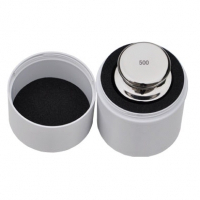
E2 Class Weights with UKAS CertificationE2 Class Weights with UKAS Certification
Use as : calibration weights or test weights
F1 Class Weights with UKAS CertificationF1 Class Weights with UKAS Certification
Use as : Calibration weights or test weights


Need to get your existing  weights re calibrated to UKAS standard?

Find out more


Guide to Selecting Calibration Weights

The validity of your work is only as good as the weakest link in your method or procedure. This is why it is imperative that you regularly check the equipment that you depend upon and the balance is one such piece of equipment that should be monitored. It is very rare these days that electronic balances are used in an ideal balance room conditions, and temperature variations or ageing electronic components can often cause the balance calibration to drift, often over a short period of time. Using a calibration weight you can monitor the calibration of the balance quickly and easily and so improve the integrity of your results.

Performing a Daily Check

A balance's calibration can drift, so to have complete confidence in your weighing results it is important to carry out a daily check on you balance to ensure it is weighing accurately.
To do the daily check select the relevant weight(s) (see below) and place on balance pan and record results in a log book.  It is normal to accept some error most commonly 3 divisions.
Example : 200g x 0.1mg using a 100g check weight, allowing an error of 3 divisions
Day 1 : 100.0002mg (reference weight)
Day 2 : 100.0003mg : OK
Day 3 : 100.0004mg: OK
Day 4 : 100.0006mg : Fail, corrective action required

Corrective  action required may take the form of calling out an engineer or performing an external adjustment using a certified calibration weight

INTERNAL CALIBRATION
If your balance is equipped with internal calibration it is still important to carry out the daily check described above  in the event this feature develops a fault and adjusts the balance incorreclty.

Selecting the Class of Weights

E2 Class Weights : Analytical Balances (0.1mg readability and more accurate)
F1 Class Weights : Milligram & Top Pan Balances (0.1g and more accurate)
M1 Class Weights : Compact Balances and Industrial Scales ( 1g and less accurate)

Selecting the Denomination of Weights

This depends upon where you most commonly weigh and then select a weight to check this part of the balances range.  For example if you have a 200g x 0.1mg analytical balance and you only use it to weigh out 100g, you would purchase a 100g check weight.  If the balance gets used across it whole range ie one day it could be used to weigh out 200g, the next 80g and 10mg.  In this case 3 weights should be test the balance across its range eg 200g, 100g, 10mg.

Online Catalogue > Weights > New Weights

  CART DETAILS


Sales Support
01865 307299

üFree Delivery on Orders Over £100
ü

Onsite Installation service

ü

Onsite Warranty

ü

Mainland UK
Coverage

ü

Technical After
Sales Support


Calibration &
Maintenance


Through our parent company European Instruments we can offer Calibration (including UKAS) and Maintenance services for

  • Balances & Scales

  • Pipettes

  • Weight Calibration (UKAS)

  • Ductless Fume Enclosures

Find Out More